'/%3e%3c/svg%3e)
'/%3e%3c/svg%3e)

Best Bullish Option Strategies Compared
So, you've got a bullish outlook on a particular stock, but you aren't sure which options strategy best suits your investment thesis? Fear not, because in this article we are going to give an overview of the best bullish option strategies.

- Long Call: A classic bullish play
- LEAPS: When you're in it for the long haul
- Bull-call Spread: Capping your upside, reducing the cost
- Covered Call: Putting your stock positions to work
Long Call: A classic bullish play
The long call is the most traded option strategy in the retail market, which is not all that surprising given it's typically a first-time option trader's gateway into options. In fact, you may have already traded this strategy yourself. But for those that haven't, let's give a quick intro.
A long call is a moderately to strongly bullish position, that requires you to buy a call option on an underlying asset. The bullish stance of this strategy is impacted by how far away the strike price of the option is from the underlying's current price. The further away, the more bullish the stance. With this position, your max profit is unlimited, and your max loss is capped at the premium paid.
Long-calls can vary massively in premium. For extremely bullish plays where the strike price sits far away from the underlying's current price, or for short-term plays where the option expires within a matter of days or weeks, premiums can often be quite cheap. This may sound great, but the highly speculative nature of these strategies means that the odds are often not on your side.
Should I buy? Ask yourself, do you expect a sizable bullish move in the underlying asset's price within the time range of the option. If so, this might be the strategy for you!
You can explore this strategy interactively below. Simply hover over the chart.
LEAPS: When you're in it for the long haul
Okay, maybe you don't expect a bullish move in the short term, but your long-term outlook on the underlying is favorable. If you want your strategy to weather short-term volatility and want to gain leveraged exposure to the long-term growth of a stock, then we've got something for you.
Introducing the long-call's bigger brother – LEAPS. Standing for Long Term Equity Anticipation Securities, this strategy is pretty much as it sounds. It involves you buying a call option with a far-dated expiration. We are talking 1–2 years into the future. This strategy style allows you to gain cheaper (leveraged) exposure to the underlying asset than if you were to purchase the equivalent units of stock outright. As with every single strategy we mention in this article, there is going to be a trade-off. LEAPS tend to be more expensive than simple long call options. This is because you're paying big for time-value here, that is, the length of time in which your investment thesis can play out. Though this also means there may be higher probability of your play materializing.
Should I buy? Ask yourself, do you have a long-term bullish outlook on the underlying asset and are you willing to put more capital at stake? We will let you ponder that one.
Bull-Call Spread: Capping your upside, reducing the cost
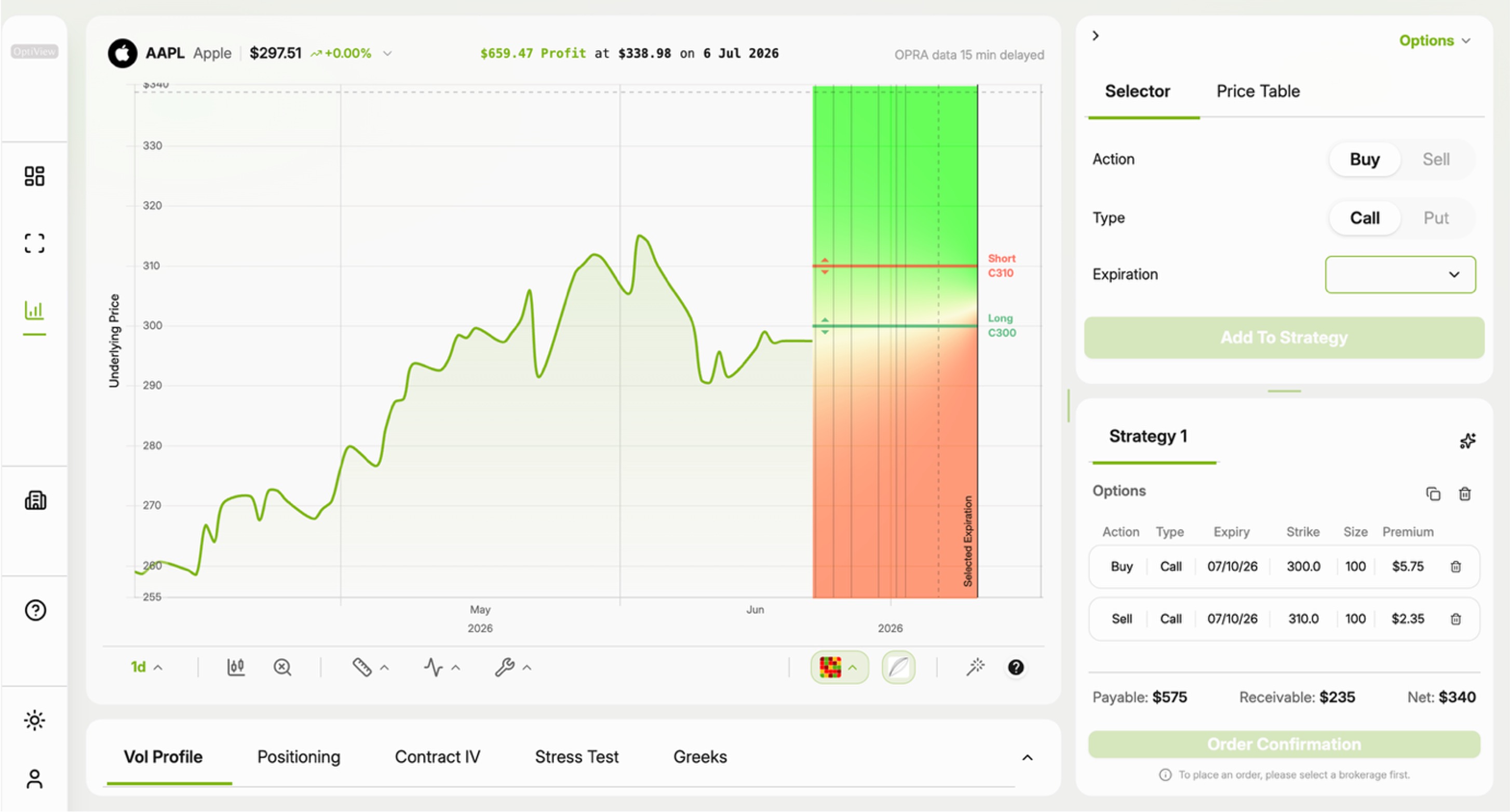
We're going to enter multi-leg territory now, but we promise it will be worth it. This is because here we are introducing the bull-call spread. A moderately bullish play, this strategy involves buying a lower strike call and simultaneously selling a higher strike call. But why would you do that? Glad you asked... By selling the higher strike call, you can finance part of your long call with the premium you collect from selling the option.
But isn't selling an option risky? Glad you asked again! Because you're both buying and selling a call, the two legs of your strategy are highly correlated. In the event the underlying moves above both option strikes, the option you're selling is not naked, because you've also bought a call which is profiting at a comparable rate.
In terms of max loss and gain, your gain is limited to the difference between strikes considering the net premium you paid. The max loss possible is the net-premium paid. If you structure this strategy correctly, you can get similar exposure to the underlying asset at a fraction of the cost of a simple long-call strategy.
Should I buy? Ask yourself, do you wish to reduce your capital at stake and have a moderately bullish outlook on the underlying? This indeed might be for you, but if you're feeling unsure, feel free to play this strategy out in the interactive payoff chart on OptiView.
Covered Call: Putting your stock positions to work
Finally, we are getting stuck into income producing bullish plays. The Covered Call is often hailed as being one of the best option strategies for novice investors, as well as a popular play for experienced investors alike. Why, you may ask? Simply put, it is an all-rounder of a strategy. A Covered Call requires you to purchase (or already own) underlying units of a stock and then sell a relative amount of higher strike call option contracts.
In this strategy, one profits most from mildly bullish movements in the underlying asset. If the stock appreciates modestly, but still below the strike price of the call option, not only do you pocket premium from selling the option, but your underlying position also appreciates. In a less ideal scenario, the price of the stock rallies above the strike and the option is called away. This means you still pocket the premium but also sell your stock for the strike, which can still be attractive if you want to realize profit. Alternatively, the stock plummets. Though your stock position decreases in value, you collect premium from selling the option which can act as a small buffer against your losses.
In all these cases, there is a clear and powerful upside. Because the position is covered, your max loss is always defined (as is your upside). Most importantly, you're able to put your existing positions to work and generate some real income on the side.
Should I buy? Ask yourself, do you have a mildly bullish outlook on the underlying asset and already own (or plan to own) stock in the underlying. If so, then this is a great all-rounder strategy. You can try building this strategy easily in the OptiView stock selector panel.
Which Bullish Option Strategy Should You Choose?
As you can see, there is no universal best strategy in options trading. The choice depends on your expectations, constraints, and objectives, as well as on the current market environment.
For example, a Long Call is best for large moves in the near term, while a Bull Call Spread is a more capital-efficient way for moderate moves. Similarly, LEAPS can offer attractive long-term exposure if IV is low when you buy, whereas Covered Calls are helpful when capital preservation is more important than appreciation.
| If you expect... | Strategy to Consider |
|---|---|
| A large bullish move in the near term | Long Call |
| A large bullish move over the next 1-2 years | LEAPS |
| A moderate rise with a defined target price | Bull Call Spread |
| Mild appreciation while generating income | Covered Call |
The decision problem is multi-dimensional and fluid market prices and environments can significantly impact the result. A Bull Call Spread that appears superior today may become less attractive tomorrow if market conditions change.
Hence, professional traders rarely limit themselves to a single strategy. Instead, they start with assumptions about the market and compare alternatives anew before deciding which structure offers the best risk-reward.
Our Strategy Assistant, powered by OptiStrat, automates this process for you. Simply enter your belief for the underlying stock price, investment horizon, and optionally constraints and objectives, and OptiStrat compares thousands of possible combinations, including the Long Calls, LEAPS, Bull Call Spreads, Covered Calls discussed here, and many more advanced structures.
We hope you enjoyed this article on the best bullish option strategies, and it helps guide you to find the right strategy! Below we have summarized the four strategies mentioned in this article.
Summary Table
| Long-Call | LEAPS | Bull-Call Spread | Covered Call | |
|---|---|---|---|---|
| Outlook | Bullish | Bullish (long-term) | Moderately bullish | Mildly bullish |
| Max Profit | Unlimited | Unlimited | Capped | Capped |
| Max Loss | Premium Paid | Premium Paid | Net Premium Paid | Premium Collected and Stock Value driven |
| Cost | Low | Moderate | Moderate-Low | High |
| Probability of Profit | Low | Moderate | Moderate | High |
| Return Potential | High | High | Moderate | Moderate |