'/%3e%3c/svg%3e)
'/%3e%3c/svg%3e)

Gaining Large-Cap Exposure With Small Accounts: Is It Really Possible?
In under 5 mins, we'll show you how to gain exposure to options on large-caps such as Tesla, Apple, and Nvidia with only $500 at your disposal.

The Dilemma of the Small Account
Today's topic is dedicated to our readers with small trading accounts who feel like they are missing out on the action.
Due to the high market value of large-cap options, as well as the fact that brokers have been slow to offer fractional lot sizes, many small-account traders are faced with a unique challenge: their capital only permits them to trade highly speculative positions, such as far out-of-the-money (OTM) or cheap options on smaller equities, often with a low probability of return.
But what if we told you this doesn't need to be the case?
Smart multi-leg options strategies, such as spreads, allow you to trade big-name stocks like NVIDIA and TSLA by reducing your premium while capping your reward profile. With these strategies, you can gain exposure to highly valued equities and profit if the option's value moves favorably in line with your investment thesis.
In this article, we're going to show you how to do just that.
The Art of the Spread
What are spread strategies? Stay with us, because it's not all that confusing.
The main principle behind spread strategies is that you simultaneously buy and sell option contracts on the same underlying asset. The beauty of this approach is that you can partially offset the premium you pay by selling an option and collecting the premium in return.
So, what's the catch? There is no big catch here. While you are capping your upside, you're also reducing your risk by limiting how much capital you have at stake.
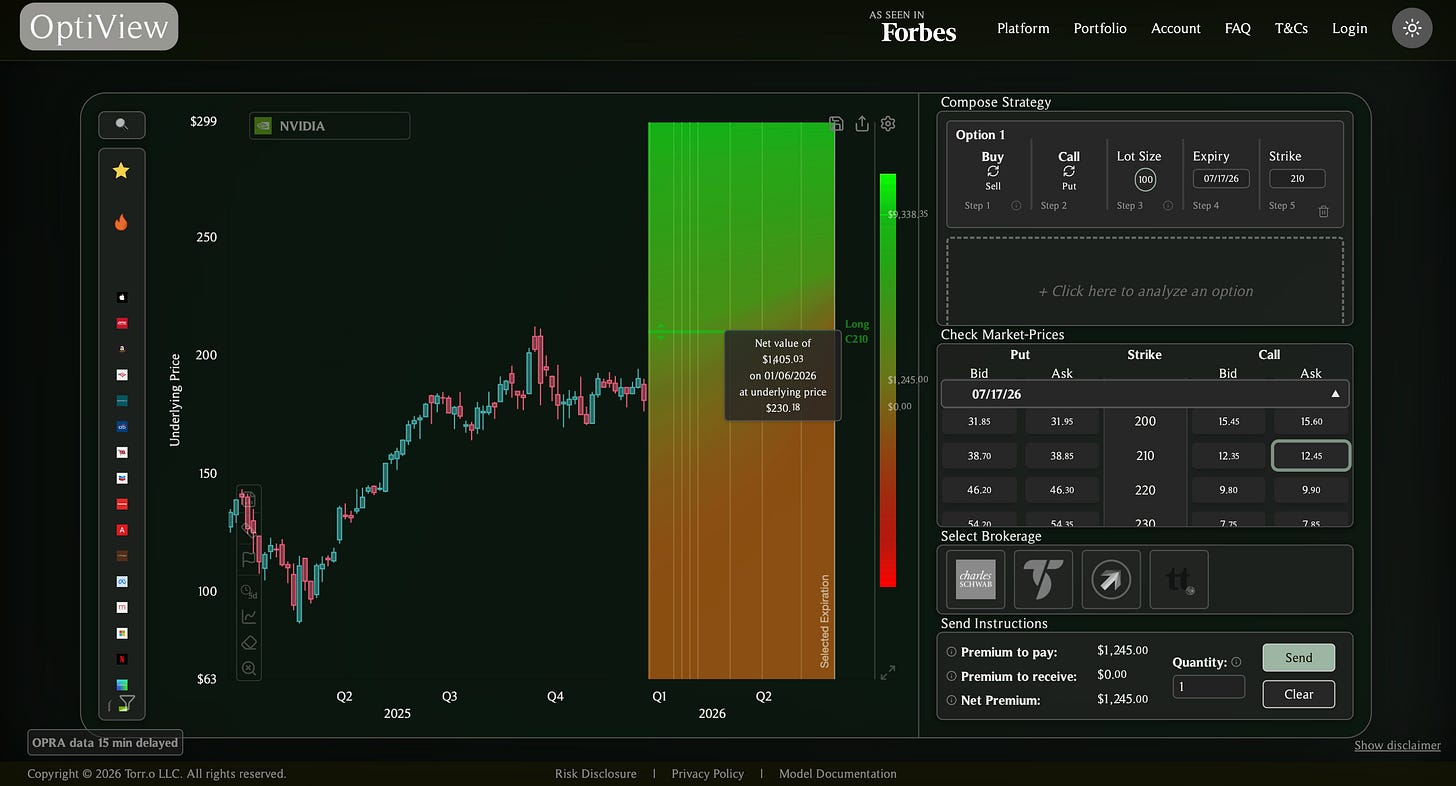
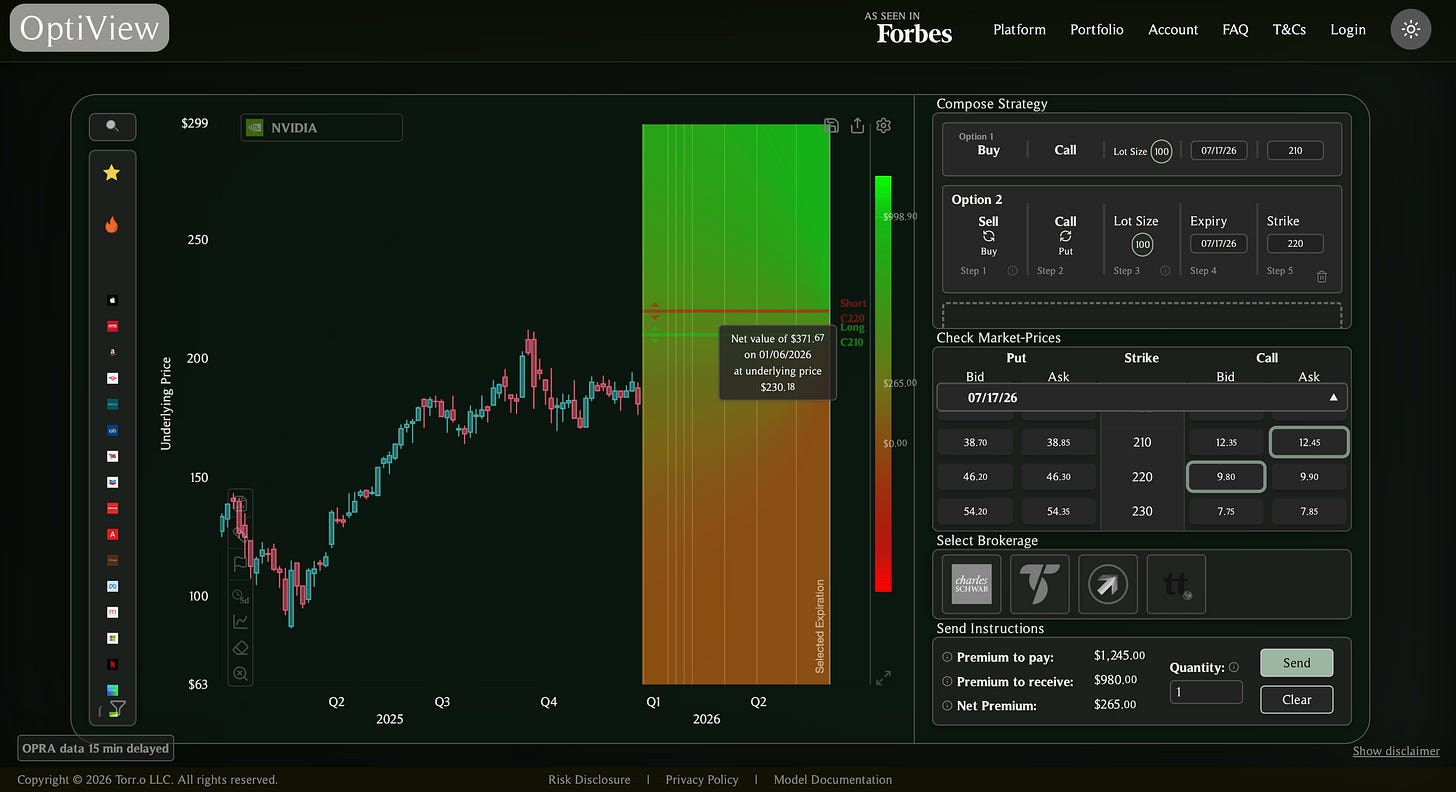
Spread Strategies at a Glance
Depending on your market sentiment, you can construct these strategies in various ways, using different strikes, expirations, and directional positions.
Below are a few examples of spread strategies that you might have heard of before:
- Bull-Call Spread: Buy a call, sell a higher strike call → Bullish stance.
- Bear-Call Spread: Sell a call, buy a higher-strike call → Bearish to neutral stance.
- Calendar Spread: Sell a near-dated option, buy a longer-dated option → Volatility and time-driven stance.
- Vertical Spread: Buy and sell options with the same expiry at different strikes → Defined risk directional stance.
- Iron Condor: Sell a call spread and a put spread → Range bound, neutral stance.
These are just a few examples of spread strategies. And quite frankly, one doesn't even need to know their names.
The reality is that there are numerous combinations of strikes, expirations, and position types that can be used to achieve specific directional exposure.
The most important factor is knowing how to structure a strategy that best aligns with your overall market sentiment.
Seamless Spread Building
Of course, one could simply log into their brokerage account and place buy and sell orders directly through the bid–ask table.
However, these tables lack the ability to holistically visualize the payoff function of sophisticated multi-leg strategies like spreads. They also often don't provide immediate feedback on how adjusting expirations, strikes, or even direction impacts the payoff and risk profile of a strategy.
This is a problem we've solved with OptiView, which allows you to place trades with your preferred brokerage while simultaneously reconfiguring your strategy in the interactive OptiView dashboard, providing greater clarity and ultimate control.
As a result, we can also see the strategy's net value across different future spot prices, allowing us to challenge our overall thesis.
Best of all, it's actually fun and enjoyable to use if you're a creative trader.
Circling back to our title, yes, it is indeed possible to gain large-cap exposure with under $500 USD, as we've demonstrated in this article. It's all about knowing how to structure the right options strategies that not only meet your preferred risk profile, but also align with your overall investment thesis.
We hope you enjoyed this article, and let us know if you start trying spreads for yourself!


