'/%3e%3c/svg%3e)
'/%3e%3c/svg%3e)

Let your money work for you: Turning your stock holdings into income by finding the right Covered Calls
The covered call strategy allows traders to generate passive income from stocks they already own. Here's how to find the right set ups.

The Covered Call.
Ahhhh, the Covered Call. It's one of the most popular option strategies, and for good reason!
Covered calls let traders generate passive income from stocks they own or purchase.
Simply put, you maintain your equity position while collecting premium by selling calls in the same size as your stock holdings. Both upside and downside are capped, making this a relatively low-risk strategy suitable for all experience levels.
Today, we'll break down covered calls and show how to structure them with the literal press of a button.
It's one of MANY new features and functionalities we are releasing in the next weeks with OptiView, so subscribe if you want to stay up to date or join our Discord to be part of our small and personal trader community.
Covered Call
A covered call involves selling call options against stock you own. To stay fully covered, you must not sell more calls than shares held. If you don't already own the underlying stock, then for every call contract you sell, you should purchase the equivalent amount of underlying stock i.e. (1 contract with a lot size of 100 requires 100 shares).
You are a net receiver of premium from selling the calls, and owning the stock means that you can simply deliver the shares into the contract if exercised, rather than committing cash.
This strategy works best when you expect the stock to rise slightly, not surge. In that scenario, you keep the premium, see moderate gains, and the option expires unexercised.
In terms of risk-reward profile…
- Best case: you collect premium and benefit from modest stock gains.
- Worst case: you still collect premium, but the stock either drops in value (whereby you are still better off than if you had not collected the premium) or the option gets exercised, and the stock gets called away (capping your upside beyond the strike price).
Criteria to consider
But what should you look out for before entering a Covered Call position? Glad you asked!
The main things you want to think about include:
- Yield: How much additional yield does underwriting a call generate? Simply put, how much premium do I receive relative to bound capital? For sellers of an option, obviously the higher the better.
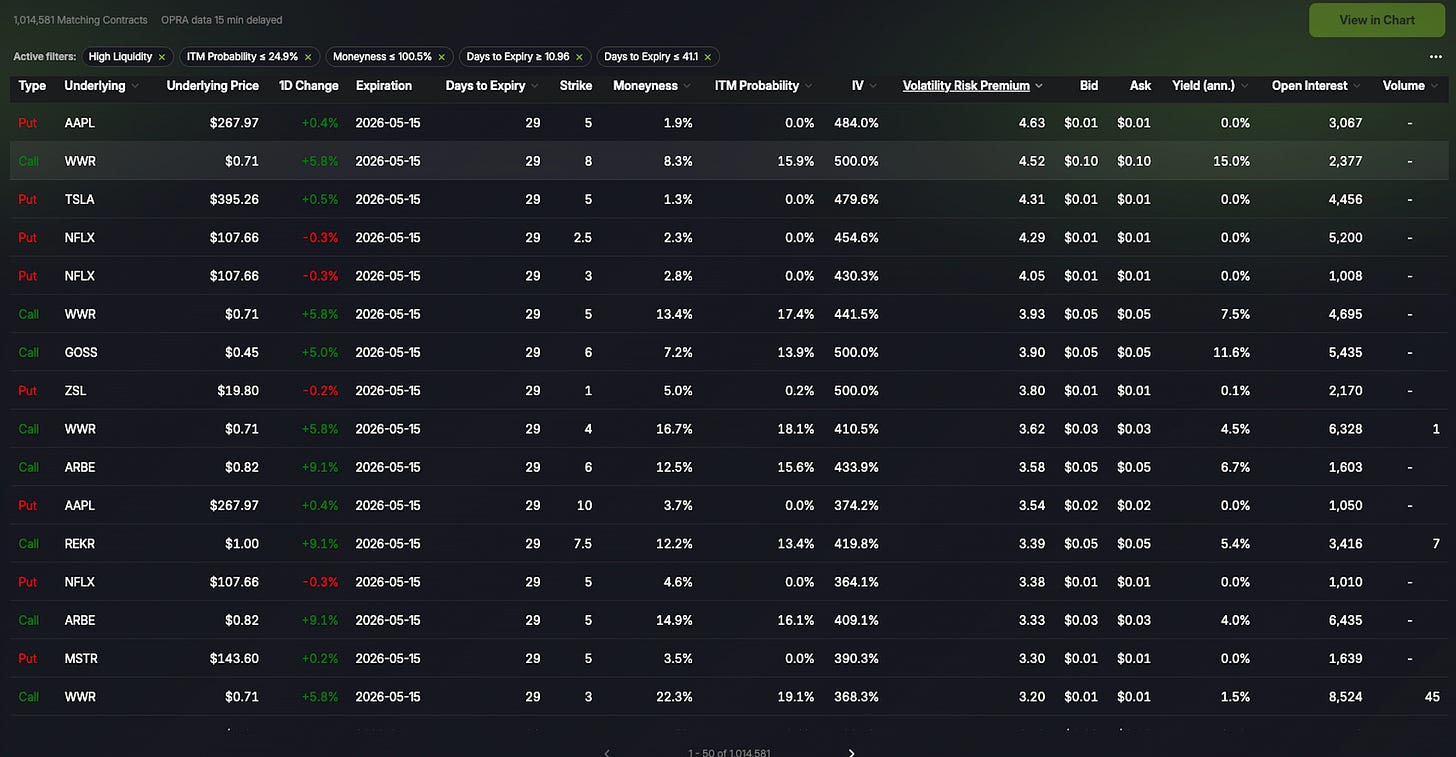
- IV: Selling calls generally benefits from high IV. The dreaded IV crush which buyers fear indeed works in sellers favour. Keep your eyes peeled for calls with elevated IV. This means people are paying big for optionality and you'll pocket more premium. For the extra boost of confidence, look out for options with a high volatility risk premium or IV/RV ratio. The difference between IV and RV depicts the spread that option sellers collect over time if realised volatility stays at its recent level.
- Price Resistance: Resistance above current price. Statistical indicators like Bollinger Bands can help you identify some price resistance which means the stock will have a hard time breaking above the strike.
- Expiration: Check for expiration proximity. Sweet spot should be around 30-45 days to allow theta to do what it does best…. decay. A good way to look at this across different strikes and expirations is Theta Efficiency. A theta efficiency of 0.03 means 3% of the option's value is melting away in your favor every single day. You want this high because as the seller, time decay is your friend.
- Delta: If you're a "delta = probability of assignment" kind of person, then selling a 0.2 - 0.3 delta option is probably the best for maximising premium with modest probability of the option actually being exercised. All else equal, a lower delta is better for option sellers since it means the covered call has less risk of being called away.
There is not a single metric indicating the best covered call, but it is a weighted combination of these characteristics that make for a decent candidate. Luckily, OptiScan provides you with all of these and many more useful filters to scan the universe of U.S.-listed options.
How to Create
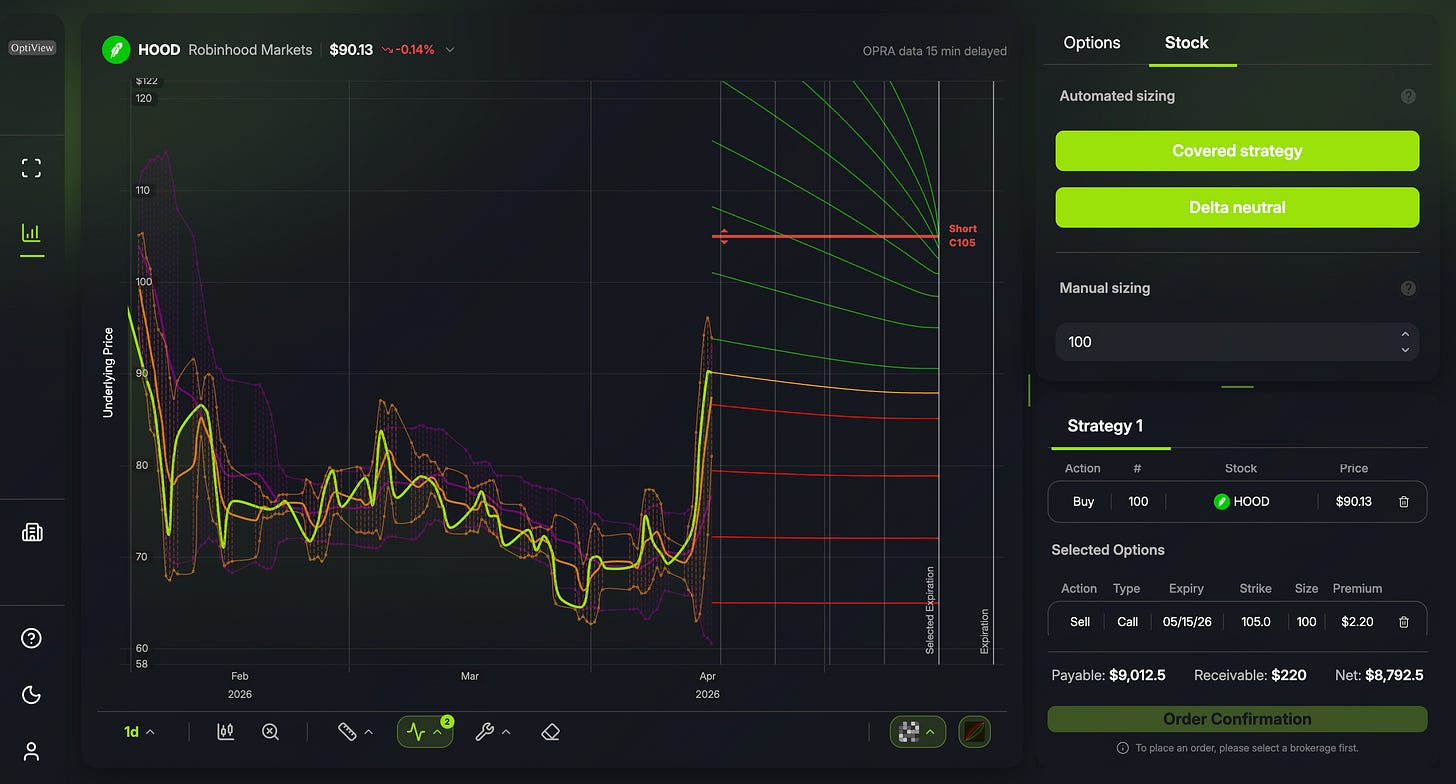
It's actually pretty easy, especially now that we've just released our stock selector on OptiView. After you've added a short call leg from the Strategy Builder view, you can head on over to the selector panel on the right which has both stock and underlying selectors.
By clicking on Stock, you'll see three possible options:
- You incrementally add as many units of stock to the strategy as you wish
- Covered Position: Automatically offsets your exposure by buying (or selling) shares to match your options position size (lot size). For example, if you sell 1 AAPL call option (representing 100 shares), you can create a covered call by buying 100 shares of AAPL.
- Delta Neutral: Adds shares to create a delta-neutral position, reducing your strategy's sensitivity to movements in the underlying price. This is particularly useful for volatility or time-decay strategies.
In all of these cases, the PnL profile shown in the chart will automatically update to reflect your constructed strategy.
You may or may not know by now, but we've just done our biggest to-date overhaul of the OptiView platform. As part of this overhaul, we are releasing features week-by-week.
If you want to stay on top of new features, hit the subscribe button or join our socials below. In addition, our discord group is probably the best for staying in touch on a regular basis and connecting with like minded traders.